

What exactly is XR? Simply put, XR stands for Extended Reality. It's not a specific technology, but rather a collective term for all emerging immersive technologies. XR encompasses VR, AR, and MR, all of which use computer graphics and wearable devices to generate real and virtual environments. The "X" in XR acts as a variable, representing infinite possibilities. This concept covers various technologies such as Virtual Reality (VR), Augmented Reality (AR), and Mixed Reality (MR). In short, XR is a general term used to describe experiences that extend or enhance our real world through digital technologies.
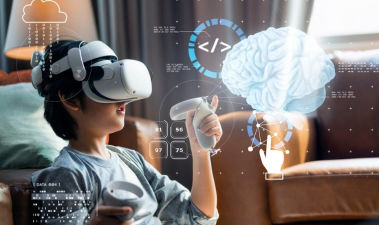
Virtual Reality (VR)
VR, or Virtual Reality, simulates a three-dimensional space using computers, and then uses various sensors to make you feel like you've truly entered that virtual world. Imagine putting on a VR headset and instantly being transported to outer space or an ancient castle—it's incredibly cool!
Augmented Reality (AR)
AR, or Augmented Reality, overlays virtual information onto a real environment. For example, if you see an advertisement in a shopping mall, AR can show you a 3D model behind the advertisement, or make the information on the advertisement jump out directly. Imagine walking down the street and seeing virtual advertisements floating around in front of you – doesn't that sound a bit like science fiction?
Mixed Reality (MR)
MR, or Mixed Reality, is simply a combination of VR and AR. It creates a new visual environment between the real and virtual worlds. For example, you can see real people and objects in a virtual scene and even interact with them. Imagine playing ball or watching movies with friends in a virtual world – wouldn't that be incredibly fun?
The Principle of XR
The core of XR technology lies in the principle of "perspective." To make virtual objects look realistic, we need correct perspective relationships. Just like when taking a photo, the background and the subject must have a unified perspective point. If the background is shot from above, then the subject cannot be shot from below. Only in this case will the photo look natural.
The Application Prospects of XR Technology in Modern Technology
Entertainment:
XR technology has brought revolutionary changes to the entertainment industry. Virtual Reality (VR) allows players to be completely immersed in a virtual game world, obtaining an ultimate immersive experience. For example, some large-scale VR games can simulate realistic battle and adventure scenes, making players feel as if they are actually there. Augmented Reality (AR) has shown outstanding performance in mobile games and applications. Games like Pokémon Go allow players to capture virtual Pokémon in real-world environments, increasing the game's fun and interactivity. This blend of virtual and real elements has opened up new avenues for entertainment, and more innovative entertainment products are expected to emerge in the future.
Education:
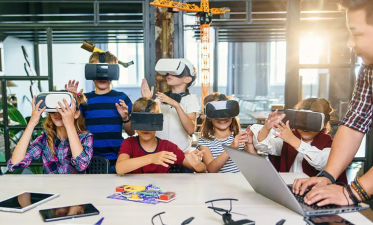
XR technology has created entirely new learning models. Students can use VR to visit historical sites, such as traveling to the ancient Roman Colosseum, experiencing the historical atmosphere firsthand, and enhancing their understanding and memory of historical events. AR technology can present complex scientific concepts with intuitive 3D images. For example, when explaining molecular structure, students can see three-dimensional molecular models through AR devices, gaining a clearer understanding of their composition and movement, which helps improve learning outcomes and stimulates interest.
Healthcare:
XR technology has broad application prospects in the medical field. Doctors use VR for simulated surgical training, simulating various surgical scenarios and emergencies in a virtual environment, improving surgical skills and response capabilities. AR technology can provide real-time auxiliary information during surgery, such as displaying the location of blood vessels and nerves, helping doctors perform surgery more precisely and improving its safety and success rate.
Industrial Manufacturing:
XR technology helps improve the efficiency and quality of industrial manufacturing. Workers wearing AR devices can obtain real-time operational guidance and data. For example, during equipment maintenance, AR devices can display information such as the internal structure of the equipment and maintenance procedures, reducing operational errors, improving work efficiency, and lowering production costs.
Conclusion
The widespread application of XR technology faces some challenges. The high cost of the technology and equipment limits its large-scale adoption. For example, high-end VR devices are expensive, deterring many consumers. At the same time, the difficulty and cost of content creation need to be further reduced to meet the growing needs of users. Currently, high-quality XR content is relatively scarce, and the creation process is complex and costly.
With continuous technological advancements and gradual cost reductions, XR technology will undoubtedly become more deeply integrated into our lives in the future. Devices will become lighter, more comfortable, and more affordable, attracting more consumers. Content creation will become richer and more diverse, covering various fields, bringing users more convenience and innovative experiences, and becoming one of the important directions for future technological development.